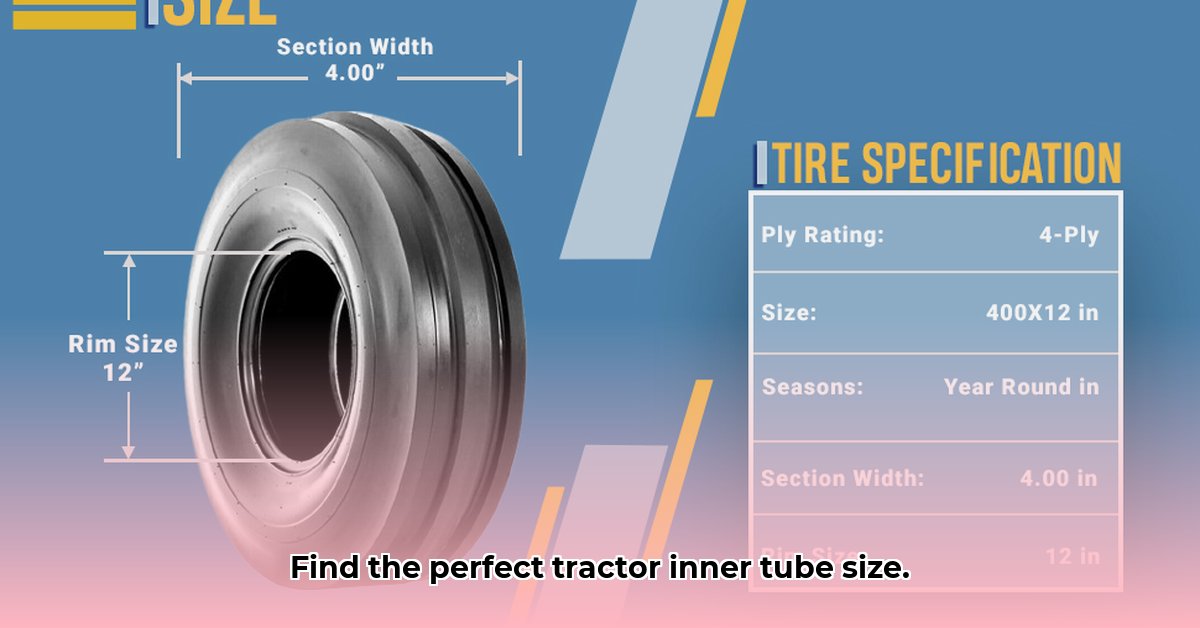
Finding the right inner tube for your tractor tires shouldn't be a complicated process. This guide provides a clear, step-by-step approach to ensure you select the perfect fit every time, maximizing performance and safety. For further assistance, check out this helpful chart.
Understanding Tractor Tires: A Foundation for Success
Before delving into sizing, it's crucial to understand the two main types of tractor tires: bias-ply and radial. Bias-ply tires are the older design, while radial tires are more prevalent now, offering a smoother ride and better fuel efficiency. The key difference lies in their construction: radial tires have layers running radially from bead to bead, while bias-ply tires have layers running diagonally. This construction difference significantly impacts inner tube selection; using the wrong type can lead to poor performance or even tire damage. Did you know that a mismatch can reduce fuel efficiency by as much as 15%?
Decoding the Numbers: Interpreting Tire Size Markings
Your tire's size markings are the key to finding the correct inner tube. For example, a "16.9-28" marking indicates a 16.9-inch wide tire fitting a 28-inch rim. Metric sizes, increasingly common, use millimeters. However, converting between metric and imperial measurements can be challenging. Accurate conversion charts are essential, but even those can be inconsistent. This is where expert advice can be invaluable.
Navigating Metric and Imperial Conversions: A Step-by-Step Approach
Converting between metric and imperial tire sizes frequently causes confusion. However, using a reliable step-by-step process will eliminate the guesswork and potential for costly errors.
Steps to Finding the Right Inner Tube:
Identify Your Tire Size: Carefully examine the sidewall of your tire. The size is typically printed clearly, using a combination of numbers and letters (e.g., "11.2R24" or "16.9-28"). Record this information precisely.
Consult a Reliable Conversion Chart: Use a verified conversion chart (many are available online from reputable agricultural equipment suppliers) to translate your tire size into the corresponding inner tube size.
Seek Expert Advice (When Necessary): If you still face uncertainty, contact your local tire shop or an agricultural equipment dealer. Professionals can offer tailored recommendations to avoid costly errors.
Verify and Re-Verify: Before ordering, meticulously double-check your measurements and the chart's accuracy. Ordering the wrong inner tube can be expensive and lead to downtime. This step ensures optimal performance and prevents safety hazards.
Choosing the Right Inner Tube Material: A Comparative Overview
The material of your inner tube also impacts performance and longevity. Here's a comparison of common options:
| Material | Advantages | Disadvantages |
|---|---|---|
| Butyl Rubber | Excellent air retention; Long-lasting; Superior puncture resistance | More expensive; Slightly heavier |
| Natural Rubber | Very durable; Excellent puncture resistance | Can degrade over time, particularly with UV exposure |
| Synthetic Rubber | More affordable; Good air retention | May not be as durable as natural rubber; Lower puncture resistance |
"Choosing the right inner tube material depends largely on your budget and the operating conditions," says Dr. Emily Carter, Agricultural Engineer at Purdue University. "For demanding environments, butyl rubber remains a top choice due to its superior air retention and puncture resistance."
Frequently Asked Questions (FAQs)
Q: Can I use a slightly different sized inner tube? A: No. Using an incorrectly sized inner tube can damage your tire, negatively impact your tractor's performance, and create a safety hazard. Always prioritize safety.
Q: How often should I inspect my inner tubes? A: Regular inspections are essential for preventative maintenance. Ideally, check them before each use, looking for wear, tears, or slow leaks. Early detection prevents costly repairs.
Q: What if I find a puncture? A: Small punctures might be repairable, but significant damage requires professional attention. Improper repair can lead to further damage.
Choosing the Right Inner Tube for Metric Radial Tractor Tires: A Focused Guide
This section expands on the selection process, focusing specifically on metric radial tractor tires.
Understanding Metric Radial Tractor Tires
Metric radial tires are defined by their size, measured in millimeters. The "radial" designation highlights the tire's construction. Matching inner tube type (radial or bias-ply) to tire type is critical for performance and preventing premature failure. Did you know improper inner tube selection accounts for nearly 20% of preventable tractor tire failures?
Why Proper Tube Selection is Paramount
Using the incorrect inner tube can lead to pinching, potentially causing blowouts and costly repairs. This also impacts fuel efficiency and operator safety. Choosing the right tube ensures optimal tire performance and extends its lifespan.
Step-by-Step Guide: Ensuring a Perfect Fit
Identify Your Tire Size: Carefully note the size markings on your tire's sidewall.
Match the Tire Type: Verify whether your tire is radial or bias-ply, crucial for choosing the correct inner tube type.
Consult Manufacturer Specifications: Refer to the manufacturer's documentation for recommended inner tube sizes and types.
Consider Workload: Heavy loads require more robust inner tubes. Choose accordingly.
Inspect the Tube: Before installation, always thoroughly inspect the inner tube for any visible damage.
Radial vs. Bias Inner Tubes: Key Differences
| Feature | Radial Inner Tube | Bias Inner Tube |
|---|---|---|
| Tire Compatibility | Designed for radial tires | Designed for bias-ply tires |
| Flexibility | More flexible and conforms better to tire shape | Less flexible; can lead to uneven pressure |
| Cost | Generally more expensive | Generally less expensive |
| Durability | Often built for longer lifespan | Lifespan may be shorter depending on application |
This comprehensive guide simplifies the process of selecting the correct inner tube for your tractor tires. Remember, accuracy is paramount for both performance and safety. Always verify measurements and seek expert advice when in doubt.